
Coating and thin film
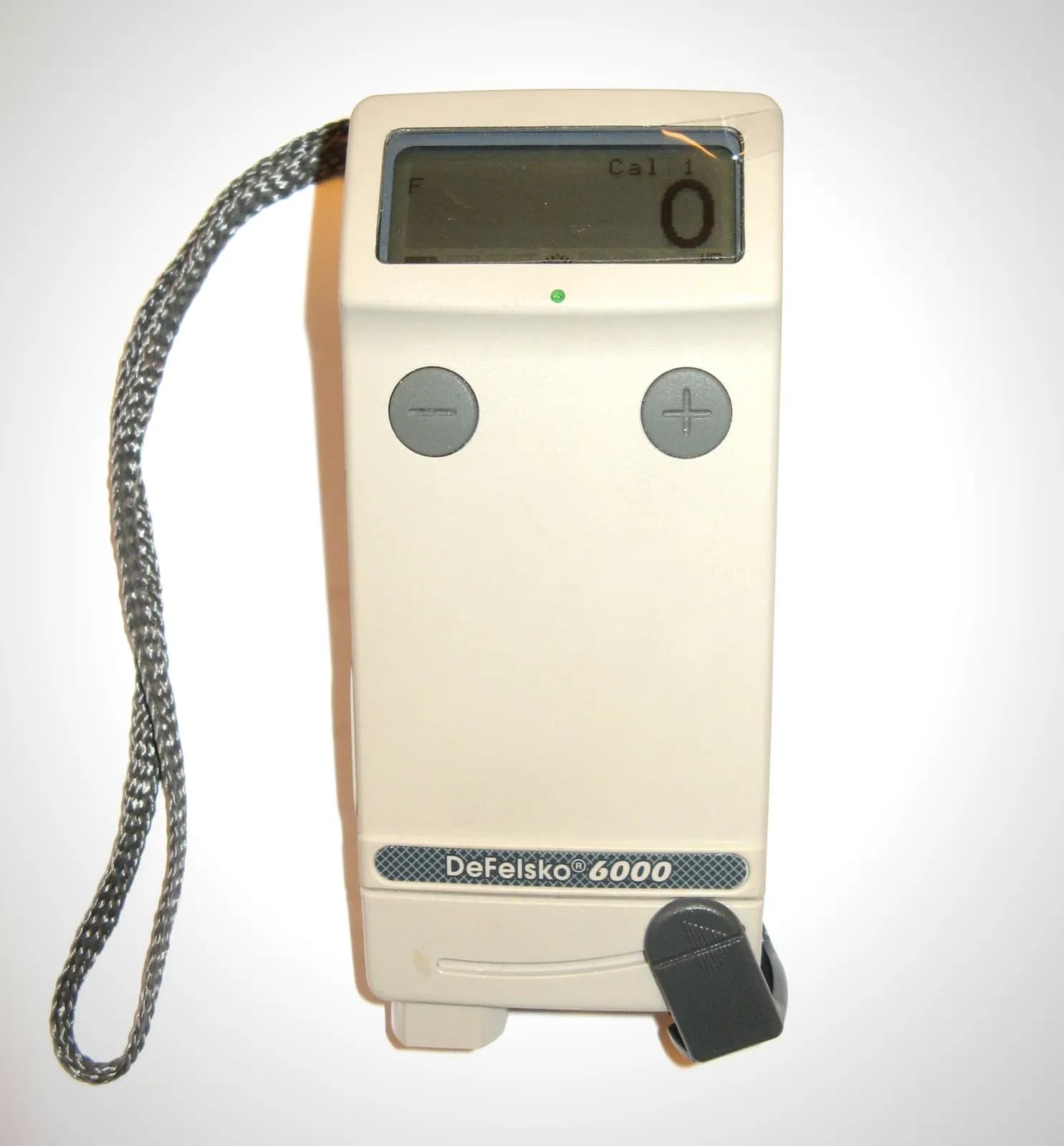
DeFelsko PosiTector 6000 Coating Thickness Gauge
Non-destructive measurement of paint, plating and thin-film thickness on metal substrates by magnetic induction and eddy-current principles.
In short
Non-destructive measurement of paint, plating and thin-film thickness on metal substrates by magnetic induction and eddy-current principles. The DeFelsko PosiTector 6000 is a portable, non-destructive coating thickness gauge that applies magnetic induction on ferrous substrates (F probe) and the eddy-current principle on non-ferrous metals (N probe).
- Measurement principle
- Magnetic induction (F) / eddy current (N)
- Substrate type
- Ferrous and non-ferrous metals
- Measurement range
- Probe dependent; standard probes cover micrometre to sub-millimetre coatings
Services on this instrument
Coating Thickness Testing
from €905–10 business daysRequest this serviceService details
Overview
The DeFelsko PosiTector 6000 is a portable, non-destructive coating thickness gauge that applies magnetic induction on ferrous substrates (F probe) and the eddy-current principle on non-ferrous metals (N probe). The combined FN probe recognises the substrate automatically and switches to the appropriate method. It measures non-conductive or non-magnetic coatings such as paint, powder coating, galvanising, anodised layers, electroplated finishes and polymer films, with traceability provided by certified calibration foils. In statistics mode the gauge reports mean, standard deviation and minimum/maximum values, and measurement series can be stored in batches and exported for reporting. Typical applications include verifying corrosion protection systems against specifications, quality control on coating lines, thickness confirmation of functional layers produced by spray pyrolysis or printing, and supporting evidence in failure analysis.
Measurement principle
Capabilities
Thickness measurement on ferrous substrates by magnetic induction
Thickness measurement on non-ferrous metals by eddy current
Combined FN probe with automatic substrate recognition
Mean, standard deviation and min/max statistics
Batch data logging and report export
Traceable verification with certified calibration foils
Suitable samples
Paint and powder coatings on steel
Galvanised and zinc coatings
Anodised layers on aluminium
Electroplated and electroless finishes
Polymer films on metal foil
Printed or spray-applied functional layers
Technical specifications
| Measurement principle | Magnetic induction (F) / eddy current (N) |
|---|---|
| Substrate type | Ferrous and non-ferrous metals |
| Measurement range | Probe dependent; standard probes cover micrometre to sub-millimetre coatings |
| Calibration | Certified thickness foils and zero plates |
| Data handling | Statistics mode, batch memory, PC export |
| Form factor | Hand-held portable, field and laboratory use |
Services on this instrument
Coating Thickness Testing
from €905–10 business daysRequest this serviceService details
- Manufacturer
- DeFelsko
- Model
- PosiTector 6000
- Catalogue no.
- 17
- Reference standards
- ISO 2178, ISO 2360, ASTM D7091, ASTM E376
Quick answers
Coating Thickness: key facts
What is DeFelsko PosiTector 6000 Coating Thickness Gauge used for?
It is used for: Thickness measurement on ferrous substrates by magnetic induction, Thickness measurement on non-ferrous metals by eddy current, Combined FN probe with automatic substrate recognition, Mean, standard deviation and min/max statistics, Batch data logging and report export, and Traceable verification with certified calibration foils.
Which samples can DeFelsko PosiTector 6000 Coating Thickness Gauge analyse?
Suitable samples: Paint and powder coatings on steel, Galvanised and zinc coatings, Anodised layers on aluminium, Electroplated and electroless finishes, Polymer films on metal foil, and Printed or spray-applied functional layers.
Which standards does DeFelsko PosiTector 6000 Coating Thickness Gauge relate to?
Relevant standards: ISO 2178, ISO 2360, ASTM D7091, and ASTM E376.
Which NAKTEM services use DeFelsko PosiTector 6000 Coating Thickness Gauge?
Coating Thickness Testing.
What results do I receive?
Typical deliverables: Thickness values (µm) per measurement point with mean/min/max/standard deviation per specimen, Sampling plan diagram and substrate/coating type information, Verification record against certified thickness standards, Comparison with specification limits and conformity assessment, and PDF report referencing ISO 2808 and raw data (CSV).
Related services
Testing
Coating Thickness Testing
Non-destructive thickness measurement of paint, coatings and metallic layers on steel and non-ferrous substrates by magnetic and eddy-current methods.
Related instruments
Corrosion and durability
ZL-6001 Salt Spray Corrosion Test Chamber
Neutral, acetic-acid and copper-accelerated salt spray testing to ISO 9227 and ASTM B117 for ranking the corrosion resistance of coatings and metallic surfaces.
Optical appearance
Rhopoint IQ 20/60/85 Gloss, Haze and DOI Surface Appearance Meter
Gloss at 20°, 60° and 85° with reflection haze, distinctness of image (DOI) and RIQ, quantifying the appearance quality of paint, coating, plastic and metal surfaces.
Coating and thin film
Siansonic Ultrasonic Spray Pyrolysis Thin-Film Deposition System
Deposition of uniform metal-oxide, conductive and functional thin films on heated substrates by ultrasonic atomisation of precursor solutions.
Coating and thin film
RK PrintCoat Instruments K Printing Proofer
Laboratory-scale simulation of gravure and flexographic printing that produces standardised proofs of inks, varnishes and functional coatings.
Further reading
Testing
Salt Spray Testing: What the Hours Really Mean
"500 hours of salt spray" does not mean a product will last five years. We explain what ISO 9227 and ASTM B117 tests actually measure, what they do not, and how to write a test specification that produces a meaningful answer.
October 13, 20265 min readQuality
Understanding ISO/IEC 17025 for Test Customers
What does an accreditation mark on a test report actually guarantee, and what does it not? A practical explanation of ISO/IEC 17025 for engineers and quality managers who purchase laboratory services.
October 6, 20264 min read
Request analysis on this instrument
Tell us about your sample and the question. Our scientists confirm feasibility and propose a measurement plan.