Training
Why Materials Characterization Training Pays Off
A badly prepared sample, a wrongly chosen parameter or an over-interpreted spectrum can cost far more than the instrument itself. We explain why structured characterization training delivers a tangible return for R&D and quality teams.
Published October 27, 2026
4 min read
NAKTEM Editorial Team
Last updated:
What good training covers
The manufacturer's installation training usually teaches how to operate the software; it does not teach which results can be trusted. Effective characterization training must address five layers together: the physical principle and limits of the method, the influence of sample preparation on the result, deliberate selection of measurement parameters, recognition of common artefacts, and reporting the result together with its uncertainty. When one of these layers is missing, the operator can run the instrument but cannot defend the data.
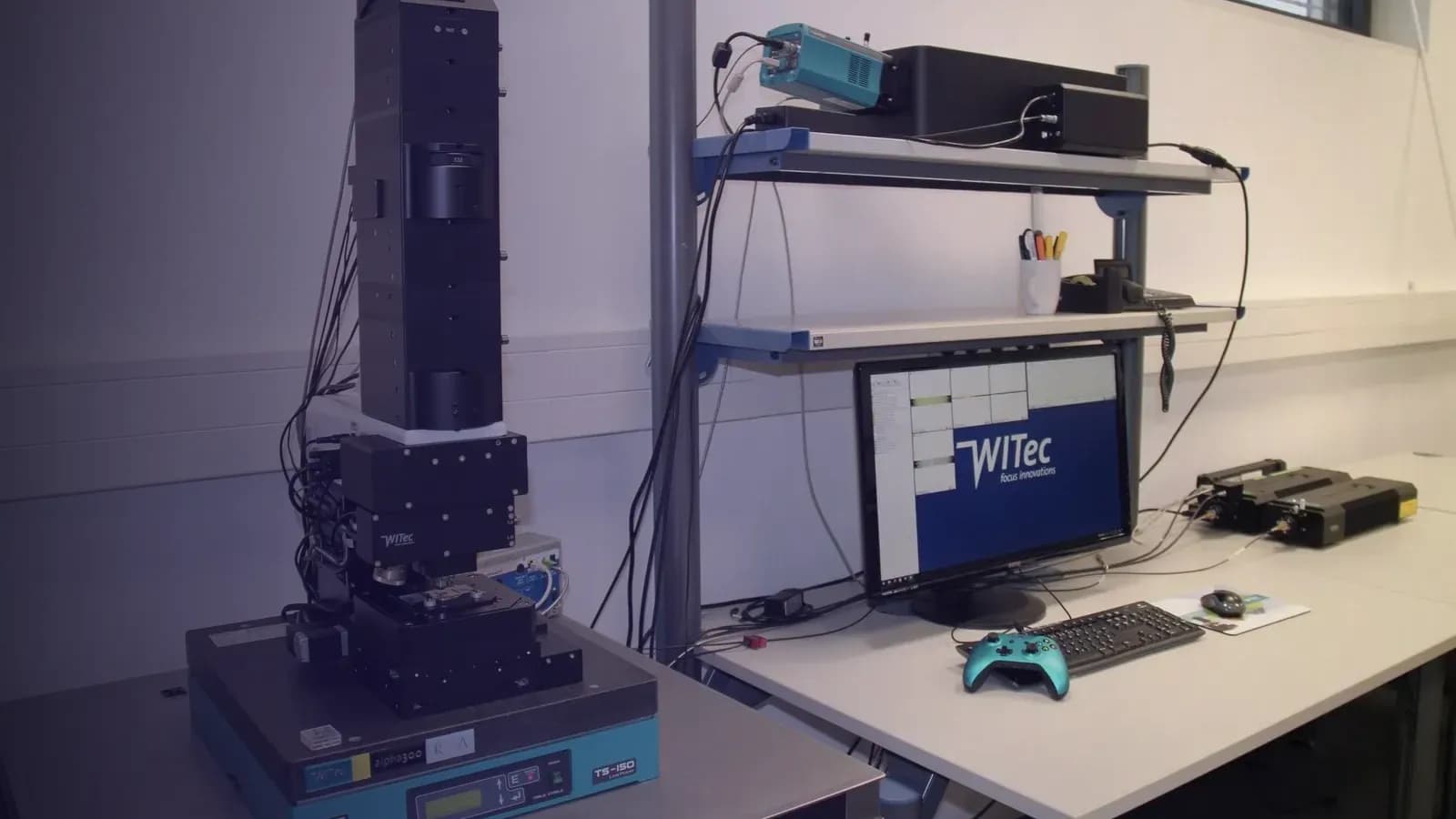
The most valuable part of any training is the hands-on session in which participants work with their own samples. The difference between the ideal spectrum in a textbook and the spectrum of a real sample from the production line can only be experienced at the instrument. Our programmes therefore support the theoretical content with examples specific to the participant's industry and, wherever possible, with samples they bring themselves.
Good training also answers the question "when not to measure". Knowing which question a method cannot answer is as important as knowing the method itself, and unnecessary or misdirected analysis requests fall markedly in an experienced team. A team that understands the limits of EDS, for instance, will not ask it to quantify lithium or to resolve a 50 nm coating on a rough surface.
Instrument operator training versus fundamentals courses
The two types of training serve different needs. Instrument operator training is for personnel who will use a specific instrument (SEM/EDS, XRD, Raman or a rheometer, for example) on a daily basis: sample loading, alignment, parameter selection, routine maintenance, calibration checks and data processing are taught hands-on at the instrument. The goal is an operator who can work independently and safely and apply standard procedures.
A materials characterization fundamentals course is aimed at people who do not operate the instrument but interpret its results and make decisions: R&D engineers, quality managers, purchasing and supplier-quality teams. It teaches which method answers which question, how to read a report and what to ask of a laboratory. In most organisations the greatest return comes from training both groups together, because a shared vocabulary eliminates the misunderstandings between an analysis request and the report that follows.
Training as part of the quality system
Clause 6.2 of ISO/IEC 17025 requires the competence of laboratory personnel to be defined, achieved through training, monitored and recorded. Records of training and competence assessment must exist for every person authorised to perform a particular method, evaluate results and approve reports. One of the most frequent findings in accreditation assessments is that personnel are in fact competent but the record demonstrating it is missing.
A structured training programme is therefore not only a transfer of technical knowledge but also documented evidence of competence. The practical assessment at the end of the training shows concretely which methods a participant can be authorised for and feeds directly into the organisation's quality system. Comparable requirements exist in sector quality systems such as ISO 9001 and IATF 16949.
How to choose the right programme
The first step in choosing training is to define the objective in one sentence: "our team should be able to interpret SEM/EDS reports independently" and "our two operators should run the XRD instrument in routine quality control" call for very different programmes. The participant profile (operator, engineer, manager), the current level of knowledge and the decisions that will be entrusted to these people after training should then be clarified. A generic course chosen without this framework rarely meets anyone's actual need.
A good programme offers hands-on sessions on real instruments, the opportunity to work with the participants' own samples, a measurable final assessment and a technical channel for questions after the training. Small groups are more effective than large classes because they increase the time each participant spends at the instrument. Ask for the programme outline and the assessment criteria in writing before committing.
NAKTEM delivers instrument operator training on the SEM/EDS, XRD, Raman and rheometer systems in its own laboratory, and fundamentals and ISO/IEC 17025 training with content adapted to the needs of your organisation. Programmes are designed jointly, according to the participants' industry and the instruments they already have, and each participant receives a record of the content covered and the practical assessment completed.
NAKTEM Editorial Team
Technical Content TeamPrevious article
Author
- Technical Content Team
- NAKTEM Editorial Team
Related services
Training
Instrument Operator Training
Hands-on operator training on analytical instruments including SEM/EDS, XRD, Raman and rheometry, covering sample preparation, measurement and data interpretation.
Training
Materials Characterization Fundamentals Training
Theory-based course on the principles of microscopy, spectroscopy, diffraction, thermal and particle characterisation, method selection and interpretation of results.
Training
ISO/IEC 17025 Laboratory Quality Training
Training on ISO/IEC 17025 requirements, measurement uncertainty, method validation, internal auditing and quality management system documentation for laboratories.
Related instruments
Microscopy and imaging
ZEISS EVO 10 Scanning Electron Microscope with Oxford EDS Detector
Nanometre-scale surface morphology imaging with simultaneous elemental mapping by energy-dispersive X-ray spectroscopy.
Spectroscopy and diffraction
Anton Paar XRDynamic 500 X-ray Diffractometer (XRD)
Crystalline phase identification, quantitative phase analysis, crystallite size and non-ambient structural studies on powders and solid materials.
Thermal, mechanical and rheology
Anton Paar MCR 302e Modular Compact Rheometer
Precise rotational and oscillatory characterisation of viscosity and viscoelastic behaviour in liquids, gels, pastes and polymer melts.
Further reading
Characterization
FTIR or Raman: Which Technique Fits Your Sample?
FTIR and Raman probe the same molecular vibrations by different physics. A practical guide to choosing between them, what each needs from your sample, and how to read the resulting spectrum.
November 9, 20267 min readCharacterization
qPCR You Can Trust: Samples, Controls and Shipping
A trustworthy qPCR result is decided long before anything is pipetted into a plate. A practical, MIQE-aligned guide to sample integrity, controls, replicates and what to send to the laboratory.
November 9, 20267 min readCharacterization
BET Surface Area and Porosity: Degassing and Reading Isotherms
The reliability of a BET result is decided before the sample reaches the instrument. A practical guide to degassing, sample amount, isotherm types and the mistakes that most often spoil a measurement.
November 9, 20266 min read
Request this service
Describe your sample and the decision it supports. We reply with a technical proposal.