Life science
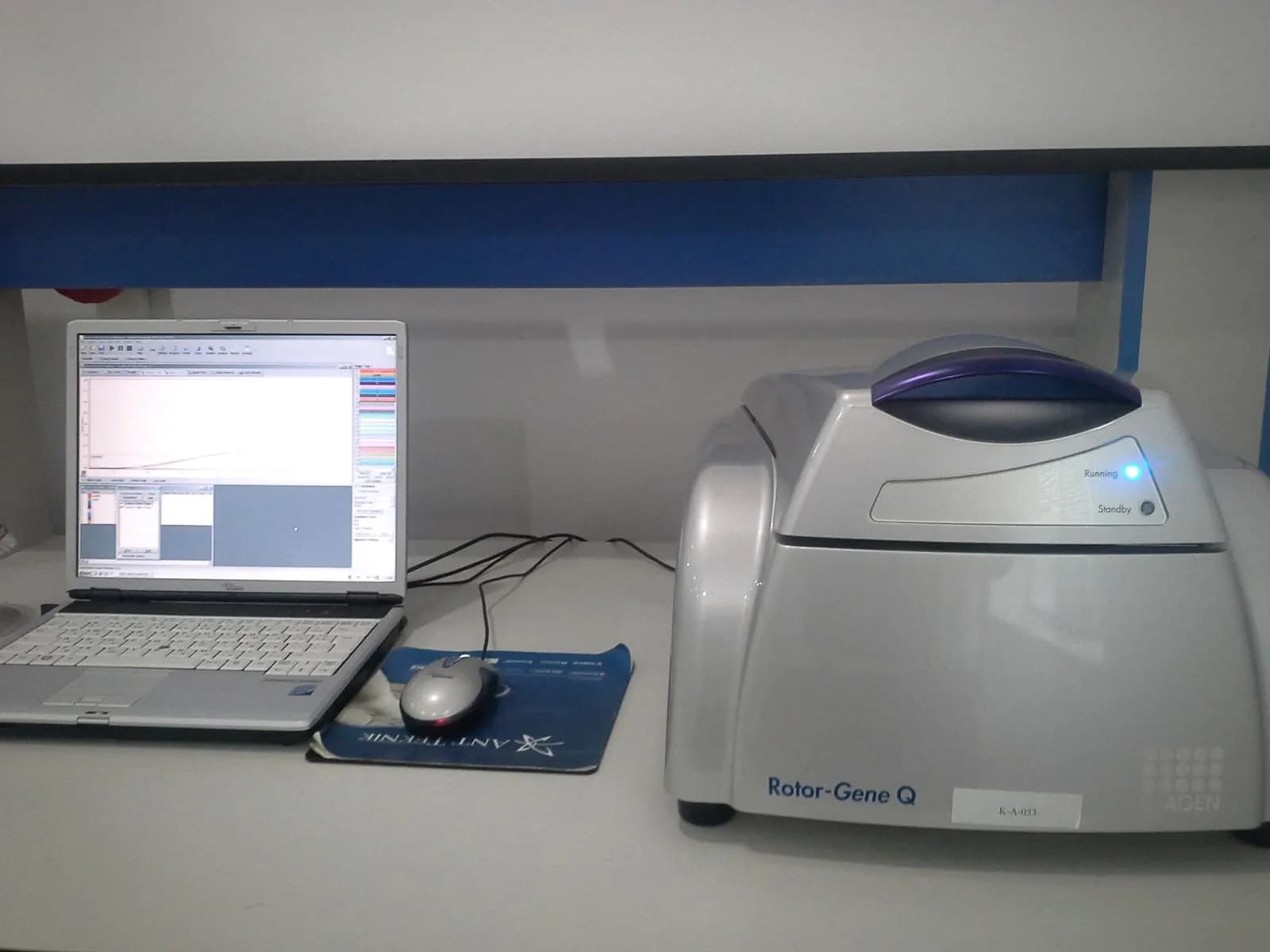
Bio-Rad C1000 Touch Thermal Cycler with CFX96 Real-Time PCR (qPCR) Optical Module
Real-time quantitative PCR in a 96-well format with five-colour multiplex fluorescence detection for gene expression, pathogen detection and genotyping.
In short
Real-time quantitative PCR in a 96-well format with five-colour multiplex fluorescence detection for gene expression, pathogen detection and genotyping. The Peltier-based block provides fast heating and cooling ramps and a temperature gradient so that primer annealing can be optimised in a single run.
- Block format
- 96-well, 0.2 mL
- Optical detection
- 6 filtered LED/photodiode pairs, up to 5-target multiplex
- Reaction volume
- 10 – 50 µL
Services on this instrument
qPCR Molecular Analysis
from €1603–7 business daysRequest this serviceService detailsInstrument Operator Training
from €42014–30 business daysRequest this serviceService details
Overview
The Bio-Rad C1000 Touch is a touch-screen thermal cycler base with gradient capability; fitted with the CFX96 optical reaction module it becomes a real-time PCR system that scans every well of the 96-well block independently with six filtered LED/photodiode pairs for multiplex detection of up to five targets. The Peltier-based block provides fast heating and cooling ramps and a temperature gradient so that primer annealing can be optimised in a single run. SYBR Green and probe-based chemistries support absolute and relative quantification, melt-curve analysis, allelic discrimination and end-point detection; the software reports standard curves, efficiency calculations and ΔΔCq-based gene expression analysis. Applications include transcript-level assessment of nanomaterial effects on cells, pathogen-load determination on antimicrobial surfaces, GMO and species verification, and molecular validation in biomaterials research.
Measurement principle
Capabilities
Absolute and relative quantification with SYBR Green and probe-based chemistries
Multiplex fluorescence detection of up to five targets
Melt-curve analysis and allelic discrimination (SNP genotyping)
Single-run primer optimisation using the temperature gradient
ΔΔCq gene expression analysis and standard-curve reporting
End-point PCR and conventional thermal cycling protocols
Suitable samples
cDNA from cell cultures and tissues
Bacterial, fungal and viral nucleic acid extracts
DNA from food, feed and agricultural products
Environmental and surface swab samples
Plasmid and synthetic DNA standards
Technical specifications
| Block format | 96-well, 0.2 mL |
|---|---|
| Optical detection | 6 filtered LED/photodiode pairs, up to 5-target multiplex |
| Reaction volume | 10 – 50 µL |
| Temperature range | 0 – 100 °C |
| Maximum ramp rate | 5 °C/s |
| Gradient range | 1 – 24 °C |
| Software | CFX Maestro for quantification, melt-curve and gene expression analysis |
Services on this instrument
qPCR Molecular Analysis
from €1603–7 business daysRequest this serviceService detailsInstrument Operator Training
from €42014–30 business daysRequest this serviceService details
- Manufacturer
- Bio-Rad
- Model
- C1000 Touch + CFX96 optics
- Catalogue no.
- 31
- Reference standards
- ISO 20395
Quick answers
qPCR: key facts
What is Bio-Rad C1000 Touch Thermal Cycler with CFX96 Real-Time PCR (qPCR) Optical Module used for?
It is used for: Absolute and relative quantification with SYBR Green and probe-based chemistries, Multiplex fluorescence detection of up to five targets, Melt-curve analysis and allelic discrimination (SNP genotyping), Single-run primer optimisation using the temperature gradient, ΔΔCq gene expression analysis and standard-curve reporting, and End-point PCR and conventional thermal cycling protocols.
Which samples can Bio-Rad C1000 Touch Thermal Cycler with CFX96 Real-Time PCR (qPCR) Optical Module analyse?
Suitable samples: cDNA from cell cultures and tissues, Bacterial, fungal and viral nucleic acid extracts, DNA from food, feed and agricultural products, Environmental and surface swab samples, and Plasmid and synthetic DNA standards.
Which standards does Bio-Rad C1000 Touch Thermal Cycler with CFX96 Real-Time PCR (qPCR) Optical Module relate to?
Relevant standards: ISO 20395.
Which NAKTEM services use Bio-Rad C1000 Touch Thermal Cycler with CFX96 Real-Time PCR (qPCR) Optical Module?
qPCR Molecular Analysis and Instrument Operator Training.
What results do I receive?
Typical deliverables: Amplification curves, Cq values and melt curve plots, Standard curve parameters (slope, efficiency, R²) or ΔΔCq relative expression tables, Negative control, no-template control and reference gene evaluation, Method summary covering primers/probes, reaction mix and cycling conditions, and Raw data (CFX export, Excel) and PDF report.
Related services
Analysis
qPCR Molecular Analysis
Real-time PCR for gene expression analysis, nucleic acid quantification and target sequence detection using SYBR Green and probe-based chemistries.
Training
Instrument Operator Training
Hands-on operator training on analytical instruments including SEM/EDS, XRD, Raman and rheometry, covering sample preparation, measurement and data interpretation.
Related instruments
Separation and purification
Beckman Coulter Optima XPN-100 Preparative Ultracentrifuge
Ultracentrifugation up to 100,000 rpm and 802,000 × g for separating, purifying and density-gradient fractionating nanoparticles, exosomes, viruses and macromolecules.
Spectroscopy and diffraction
PerkinElmer FL 8500 Fluorescence Spectrometer
Photoluminescence characterisation of liquids, solids and powders through excitation and emission spectra, 3D fluorescence maps and quantum yield.
Separation and purification
CRP-02A Cross-Flow (Tangential Flow) Membrane Filtration System
Fouling-resistant concentration, diafiltration and size-based fractionation of nanoparticle, protein and colloidal suspensions through MF and UF membranes.
Further reading
Characterization
qPCR You Can Trust: Samples, Controls and Shipping
A trustworthy qPCR result is decided long before anything is pipetted into a plate. A practical, MIQE-aligned guide to sample integrity, controls, replicates and what to send to the laboratory.
November 9, 20267 min read
Request analysis on this instrument
Tell us about your sample and the question. Our scientists confirm feasibility and propose a measurement plan.